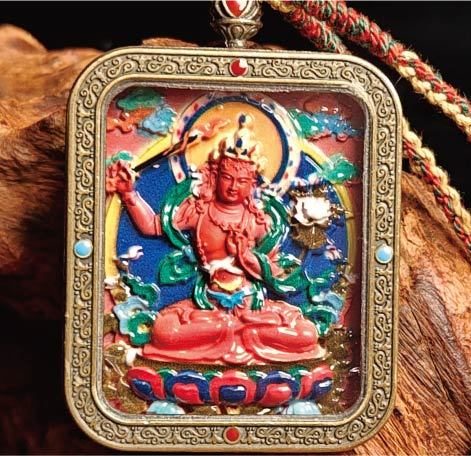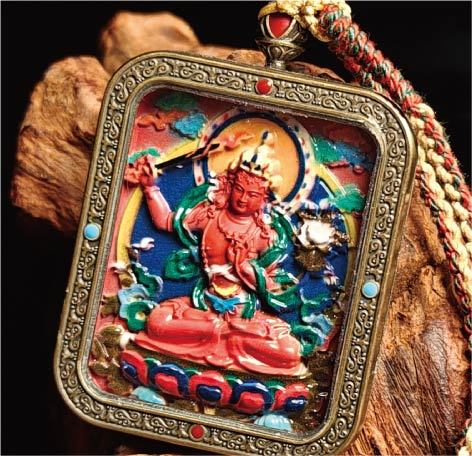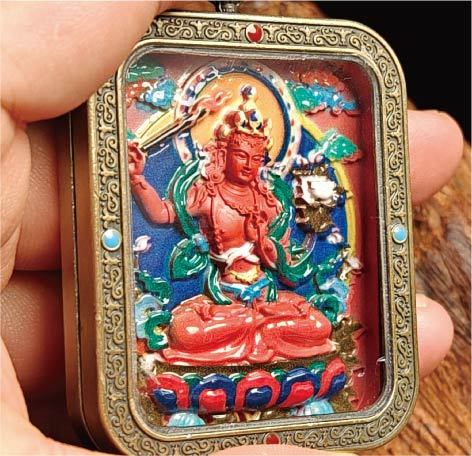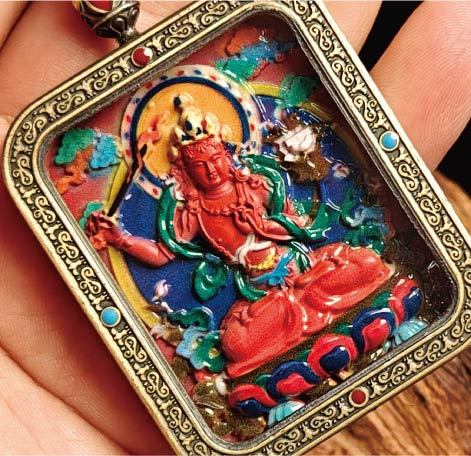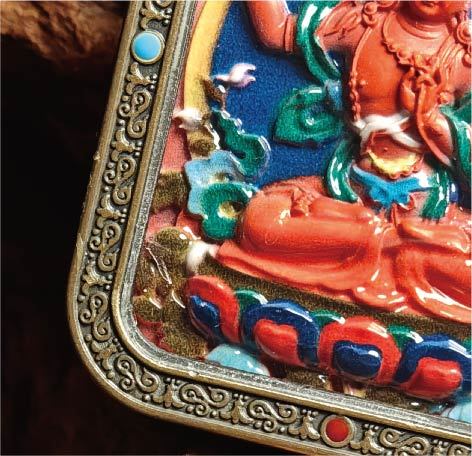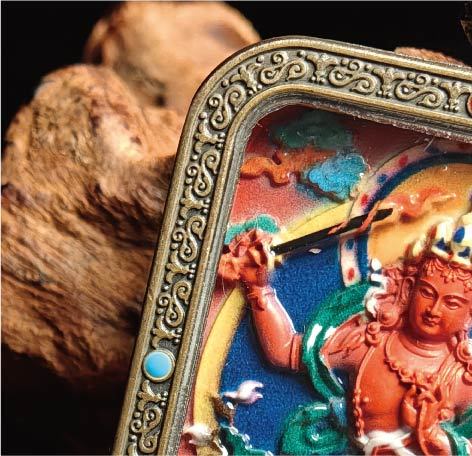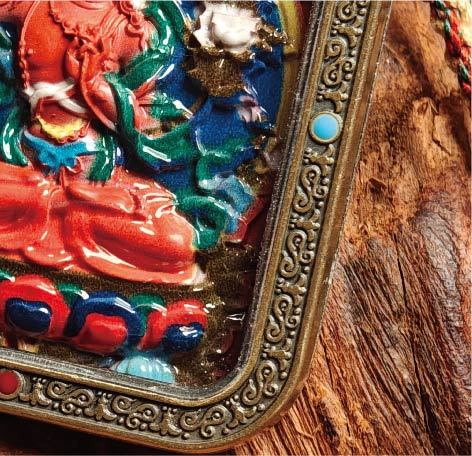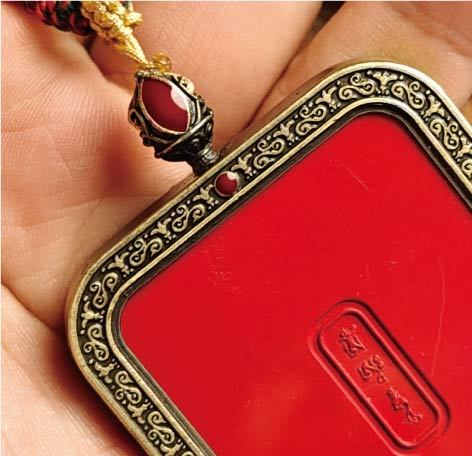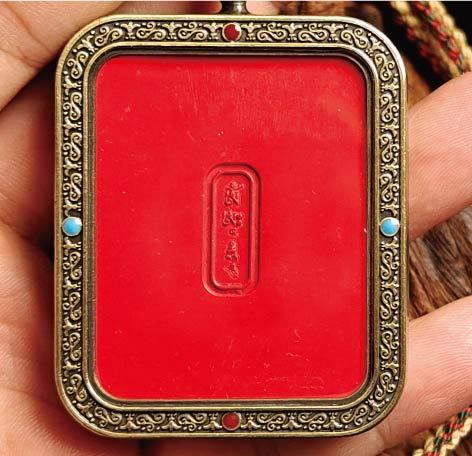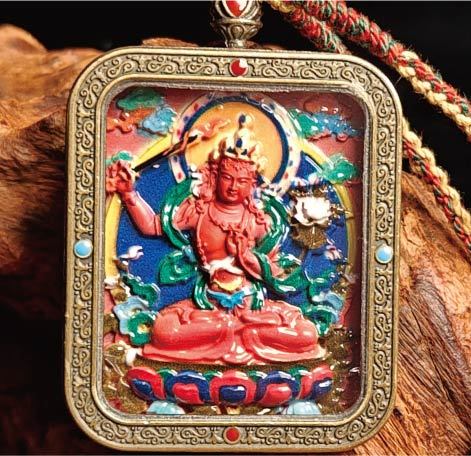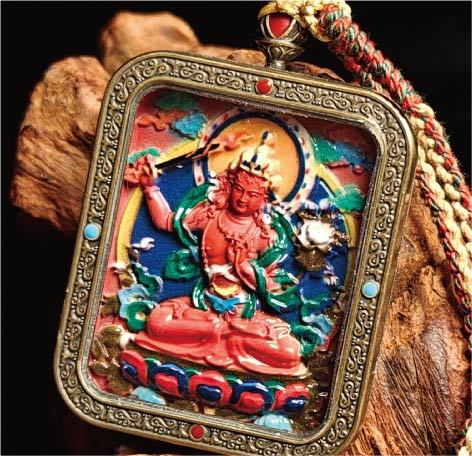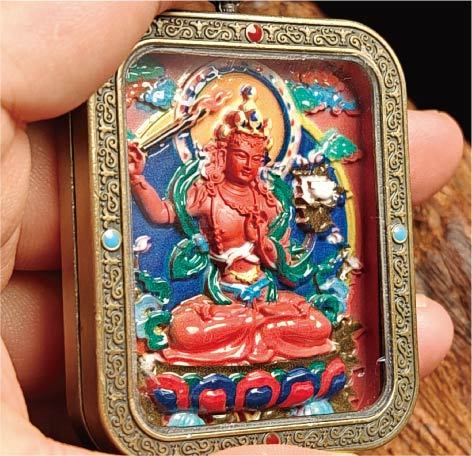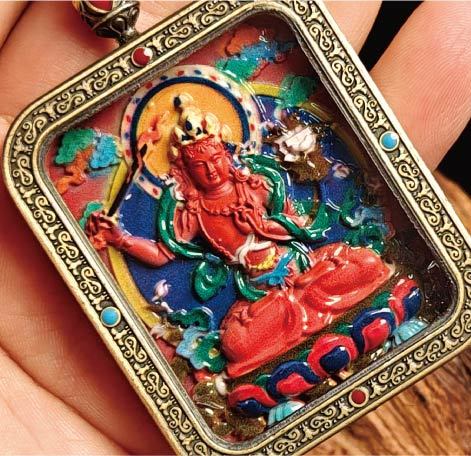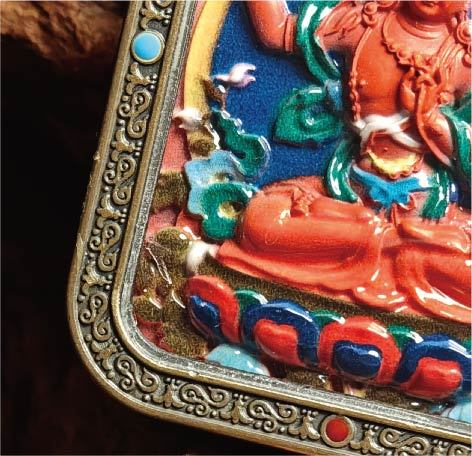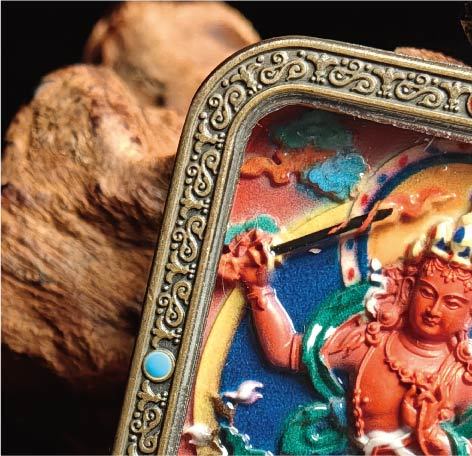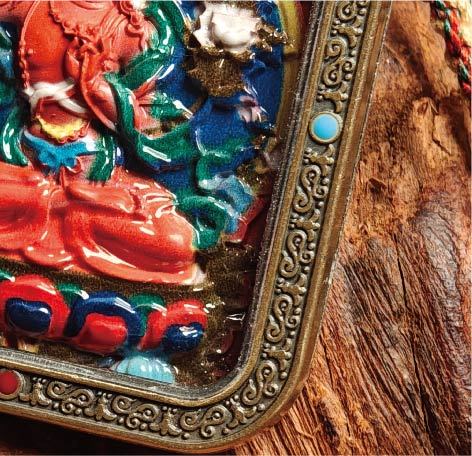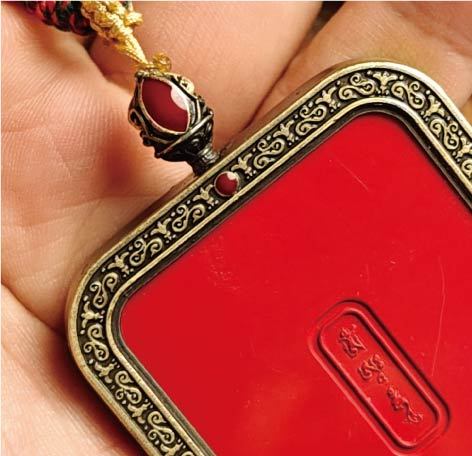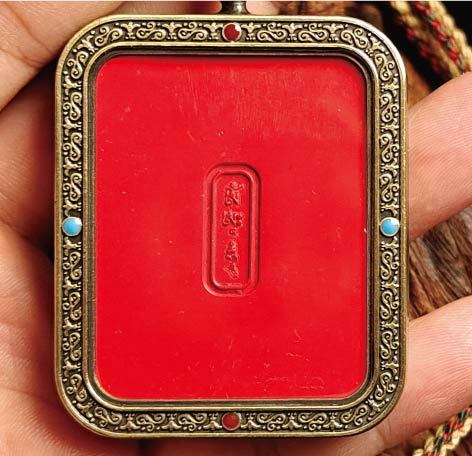
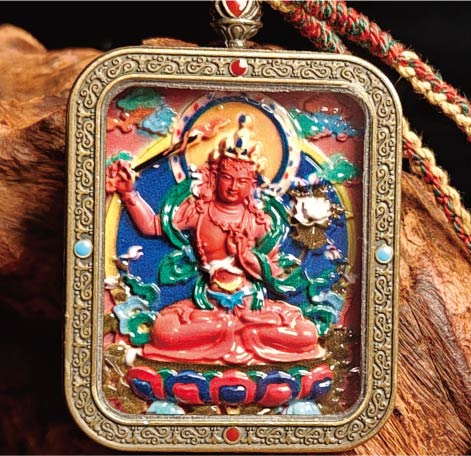
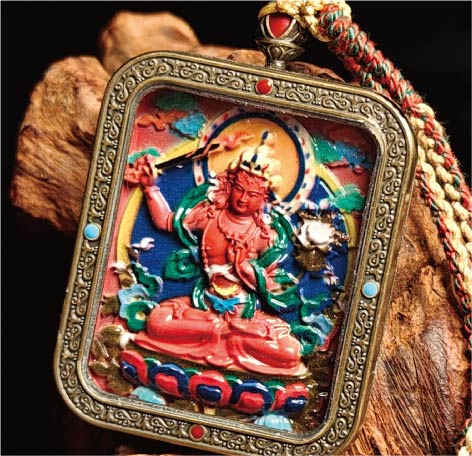
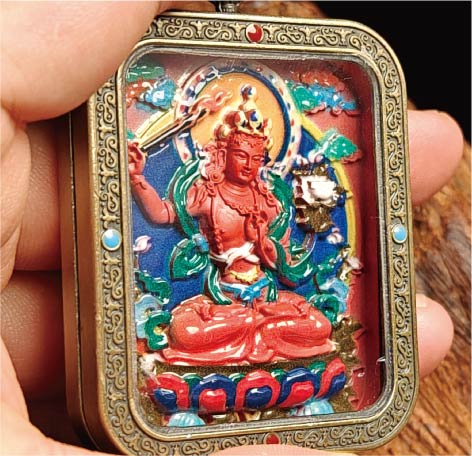
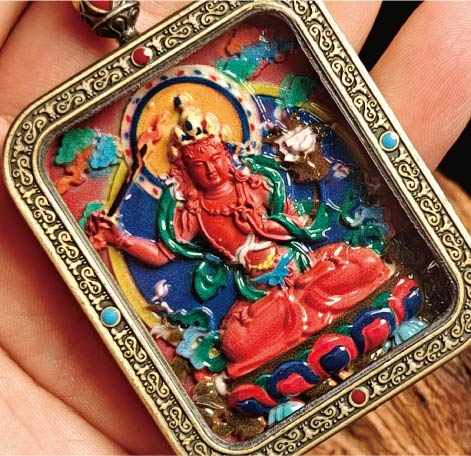
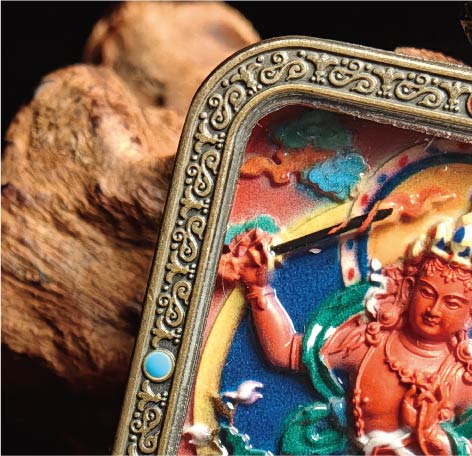
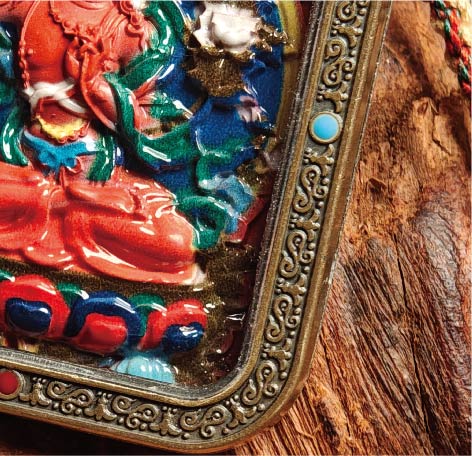
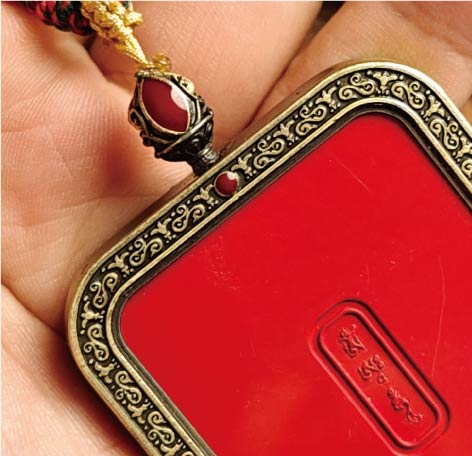
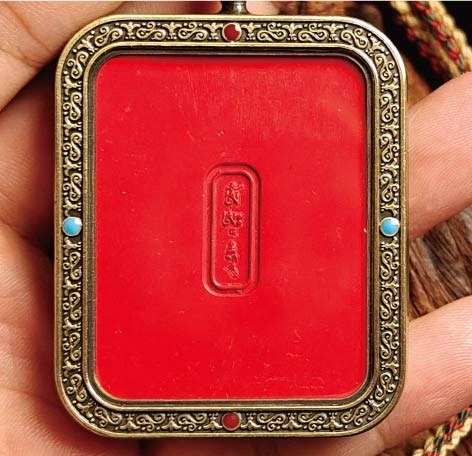
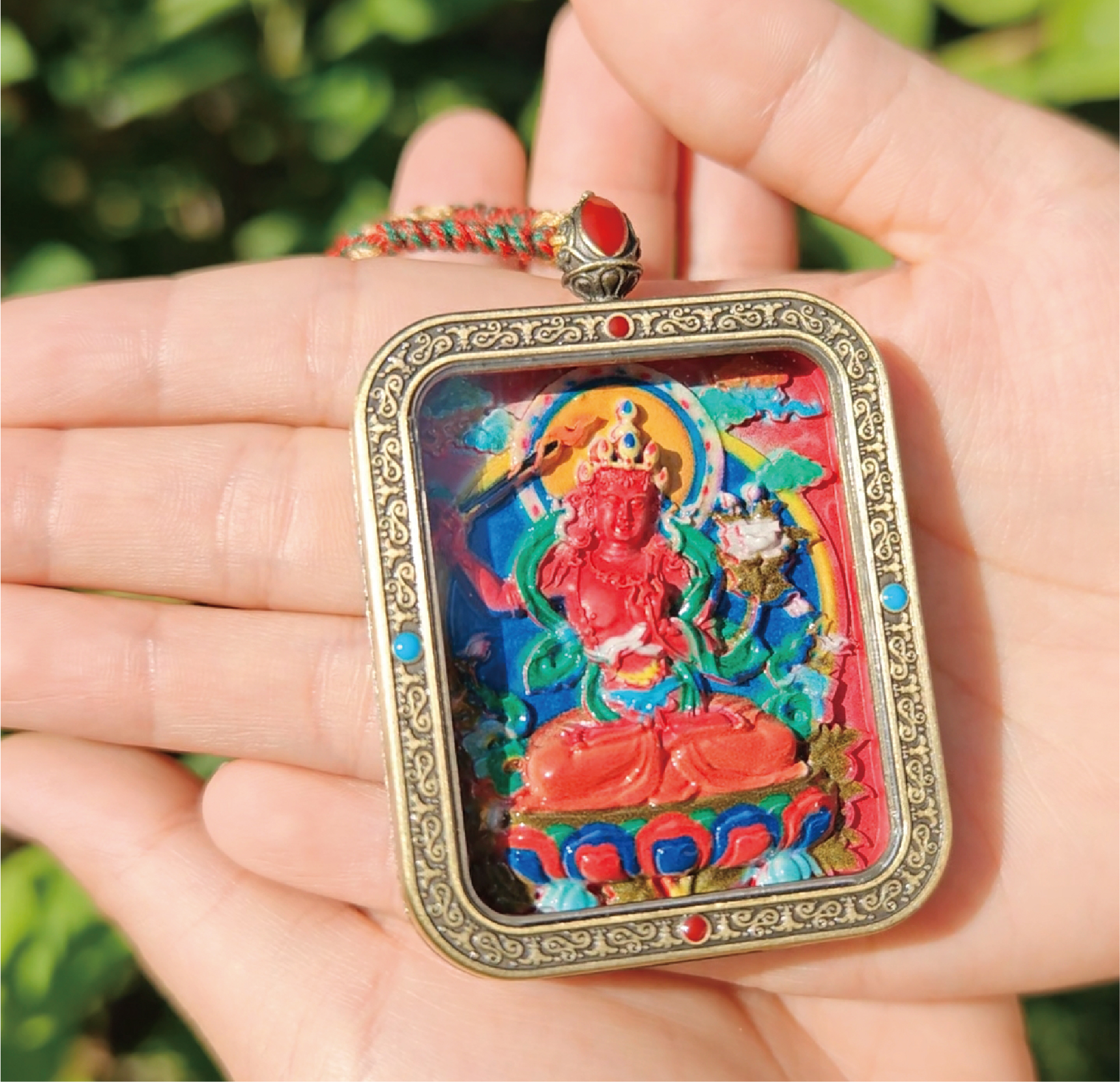
Thangka pendant of Manjushri Bodhisattva (from the Tang Dynasty tradition) / Red sand painting, three-dimensional carving, approximately 47mm x 57mm, double-sided design, with cord.
🌟 What is Manjushri? — The Sharp Sword of Prajna Wisdom
Manjushri, also known as Manjushri Bodhisattva, is a symbol of prajna wisdom in Tibetan Buddhism and is regarded as the source of wisdom for all Buddhas. The meaning of "Manjushri" is the ultimate subtlety of wonderful virtues, while "Shri" signifies auspiciousness and prosperity. His wisdom cuts through delusions like a sword, and his light illuminates the darkness of ignorance. He bestows profound wisdom upon all sentient beings and guides them from the world of confusion to the shore of enlightenment.
According to scriptures, Manjushri Bodhisattva was the teacher of countless Buddhas in past lives and is said to attain Buddhahood in future lives as well. In his left hand, he holds a lotus bearing the Prajna Sutra, symbolizing the teachings of supreme wisdom, while in his right hand, he raises the sword of wisdom, representing the power to sever delusions and attachments. His depiction riding a lion signifies that the virtue of his wisdom breaks through all obstacles and demonstrates fearless power. He is particularly revered for benefits related to academic achievement, passing exams, awakening wisdom, and engaging in debates without hindrance, making him a deeply respected guardian for students, researchers, and all seekers of knowledge.
This pendant is meticulously crafted based on the strict guidelines of Tibetan thangka (tangka) measurements, elegantly portraying the youthful and wise appearance of Manjushri Bodhisattva. Wearing the crown of the Five Wisdoms, he holds the sword imbued with the flame of wisdom high in his right hand, while supporting the Prajna Sutra in his left hand. His form is both graceful and powerful, serving as a precious embodiment for those who wish for academic success, increased wisdom, eloquence, and improved memory.
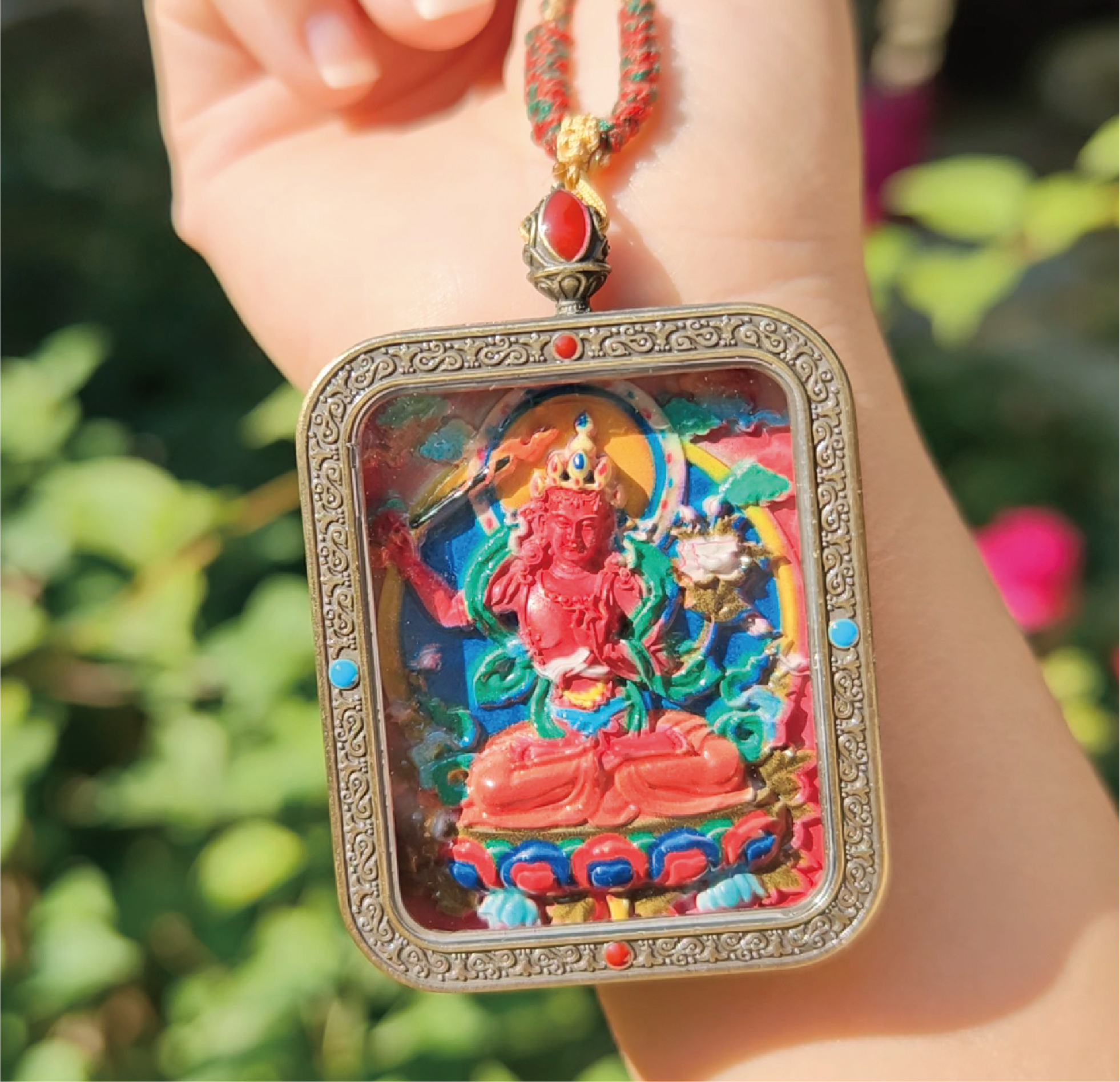
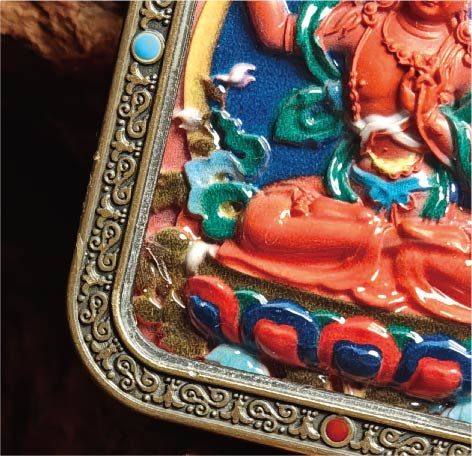
This item employs a three-dimensional relief technique, intricately carving the majestic features of the deity within a small dimension. Every detail, from the lotus pedestal to the ritual implements and clothing, is clearly expressed, allowing one to feel its three-dimensionality by touch.
Furthermore, it is hand-painted using natural mineral pigments. Based on the red of cinnabar, the traditional colors of thangka, such as gold, green, and blue, shine brightly, combining depth with elegance. Over time, the colors remain as vibrant as on the first day.
The surface is adorned with color relief, making it majestic and precious, while the back retains the original texture of cinnabar, offering a delicate and moist touch. When worn on the chest, it serves as an amulet that protects daily life and brings peace of mind, while also being an artistic masterpiece of the East that can be appreciated closely.
Care and Precautions
-
Avoid high temperatures and direct sunlight; do not place it in a car or near heating sources.
-
It is sensitive to impact. Be cautious of contact with hard objects and falls.
-
Avoid water, sweat, and cosmetics; remove it during bathing or swimming.
-
Wipe with a soft, dry cloth. Do not wash with water.
-
Store in a soft cloth bag or box in a cool, dark place.
-
The creation of thangka images is sacred. Wear it with respect.